
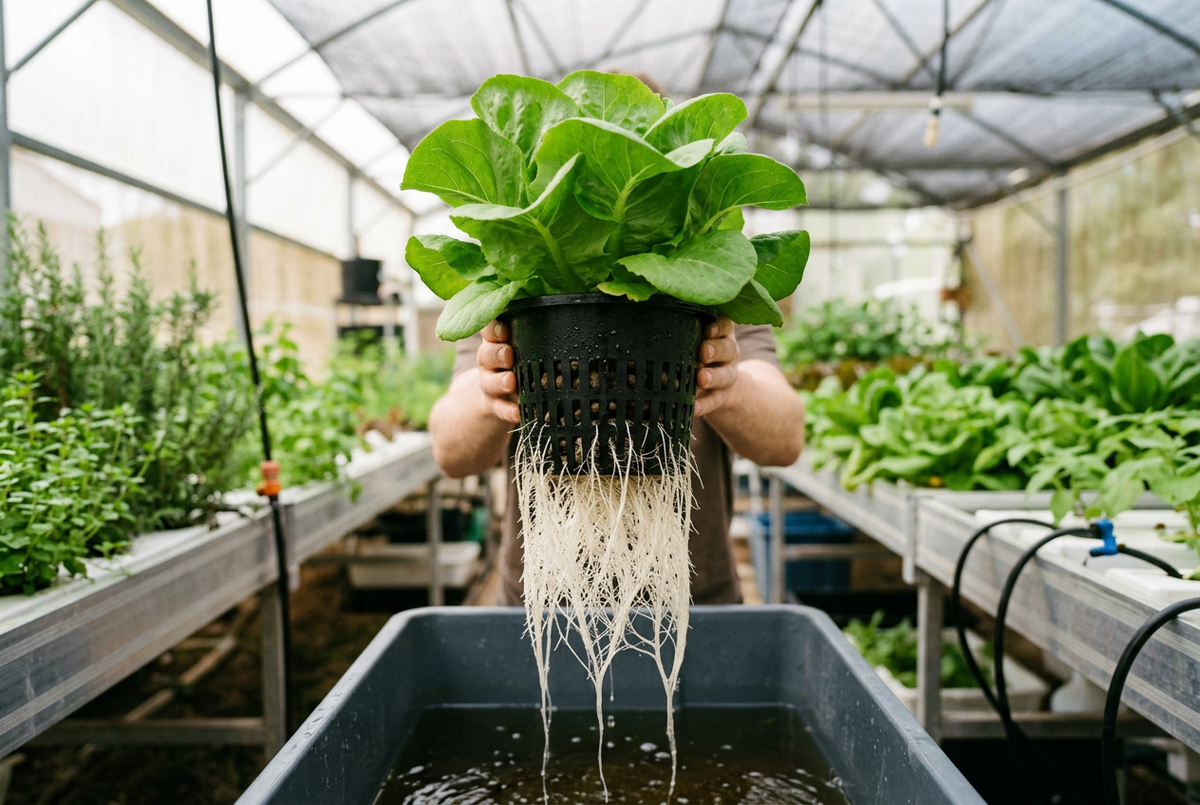
Healthy plant growth starts with a strong root system and the efficient uptake of essential nutrients. While a good-quality base fertiliser provides the nutrients plants need, certain organic supplements can help support the growing environment and improve nutrient availability.
Two compounds that have attracted considerable interest among hydroponic and traditional gardeners are humic acid and fulvic acid.
Derived from decomposed organic matter, these naturally occurring substances are commonly used in agriculture, horticulture and hydroponics. They can influence nutrient availability, root development and various aspects of plant growth.
But what exactly are humic and fulvic acids? How are they different, and what benefits can they offer your plants?
Let's take a closer look.
What Are Humic and Fulvic Acids?
Humic and fulvic acids are complex organic substances formed during the decomposition and transformation of plant and microbial material over long periods. They are important components of humus, the organic fraction of healthy soils.
Humic substances are commonly separated into three fractions: humic acids, fulvic acids and humin, based on their solubility. Unlike humic and fulvic acids, humin remains insoluble in both acidic and alkaline solutions and is closely associated with soil minerals. This guide focuses on humic and fulvic acids because of their use in nutrient and supplement formulations.
These fractions are diverse, heterogeneous materials, not individual compounds with a single fixed molecular structure. Although they share a common origin, they have different chemical properties and behave differently in growing environments.
What Is Humic Acid?
Humic acids are the fraction of humic substances that dissolves in alkaline solutions but precipitates when the solution is made strongly acidic. They are generally dark brown to black and are often described as having larger, more complex molecular components than fulvic acids, although their composition varies with their source and extraction method.
In horticulture, humic acids are valued for their ability to interact with nutrients and minerals, forming complexes that can influence nutrient availability.
Potential benefits include:
- Supporting nutrient availability through interactions with essential minerals.
- Influencing root development and plant growth.
- Improving certain properties of soil and growing media.
- Providing organic compounds that can interact with beneficial microorganisms.
Humic acid is particularly useful in soil-based growing because it can contribute to the chemical and biological properties of the root environment.
What Is Fulvic Acid?
Fulvic acids are the fraction of humic substances that remains soluble in both acidic and alkaline solutions. They are generally yellow to light brown and are often described as having smaller molecular components than humic acids. Like humic acids, they are diverse mixtures rather than a single compound.
Their solubility and chemical properties allow them to interact with a variety of mineral nutrients.
Potential benefits include:
- Complexing certain mineral nutrients and influencing their availability.
- Supporting nutrient uptake and plant metabolic processes.
- Supporting root development and overall plant growth.
- Complementing a balanced plant nutrition program.
Fulvic acid is particularly interesting for hydroponic growers because of its water solubility and ability to remain in solution under a wider range of pH conditions.
Humic Acid vs Fulvic Acid: What's the Difference?
Although these materials are often sold together, they are not interchangeable.

The illustrations are conceptual, not exact molecular structures. The main differences relate to solubility, molecular characteristics and behaviour in different growing environments. Humin provides useful context as the insoluble fraction, while the table below focuses on the two fractions commonly used in nutrient and supplement formulations.
| Characteristic | Humic Acid | Fulvic Acid |
|---|---|---|
| Molecular characteristics | Generally larger, more complex components; varies by source | Generally smaller components; varies by source |
| Colour | Dark brown to black | Yellow to light brown |
| Solubility-based distinction | Soluble in alkaline solutions; precipitates under strongly acidic conditions | Remains soluble in acidic and alkaline solutions |
| Nutrient interaction | Forms complexes with various minerals | Interacts with and complexes various nutrients |
| Common applications | Soil, growing media and suitable hydroponic formulations | Hydroponics, soil, coco and foliar products where labelled |
Both can be valuable additions to a growing program, but the choice depends on the formulation, growing method and intended application.
The Benefits of Humic and Fulvic Acids for Plants
Research into humic substances has identified several ways they can influence plant growth and development. The results vary depending on the source, concentration, plant species and growing conditions.
Here are some of the main reasons growers incorporate them into their feeding programs.
1. Improved Nutrient Availability
Plants require a range of essential nutrients, including nitrogen, phosphorus, potassium, calcium, magnesium and trace elements such as iron, manganese and zinc.
Humic and fulvic substances can interact with these nutrients, forming complexes that influence their solubility and availability.
This can be particularly useful for certain micronutrients, which may become less available under unfavourable pH conditions.
Fulvic acids, in particular, are valued for their ability to remain soluble across a broad pH range and interact with mineral nutrients.
It is important to understand that these substances do not automatically prevent nutrient lockout or replace proper pH management. They are best viewed as supplements that can complement a well-balanced nutrient solution.
2. Supporting Root Development
A healthy root system is essential for successful plant growth.
Research suggests that certain humic substances can influence root development, including root branching, root hair formation and overall root growth.
A well-developed root system provides a greater surface area for water and nutrient absorption, helping plants establish themselves and maintain healthy growth.
This is one reason humic and fulvic supplements are popular during propagation, transplanting and early plant development.
3. Supporting Plant Metabolism and Growth
Humic substances can influence several physiological processes within plants.
Depending on their composition and concentration, they may influence nutrient metabolism, enzyme activity and processes associated with root and shoot development.
Rather than acting as a replacement for fertiliser, they work alongside essential nutrients to support the plant's natural growth processes.
4. Supporting Beneficial Microorganisms
A healthy root environment is home to a complex community of microorganisms.
Beneficial bacteria and fungi play important roles in nutrient cycling, organic matter decomposition and maintaining a healthy root environment.
Humic substances can provide organic compounds that interact with soil microorganisms and may support aspects of microbial activity.
This is particularly relevant in living soil and organic growing systems, where microbial activity is an important part of nutrient cycling.
In hydroponics, the role of microorganisms depends on the system. Some growers deliberately encourage beneficial microbial populations, while others prefer cleaner, more controlled nutrient solutions.
Humic and fulvic supplements should not be considered a substitute for good hygiene or a proven treatment for root diseases.
5. Helping Plants Cope With Environmental Stress
Plants regularly encounter environmental challenges, including temperature fluctuations, excessive light, drought, salinity and nutrient imbalances.
Some studies have found that humic substances can influence plant responses to environmental stress.
By supporting root development, nutrient availability and various physiological processes, suitable formulations may help plants maintain healthy growth under challenging conditions.
The degree of benefit depends on the plant species, growing environment and product being used.
6. Supporting Flowering, Fruiting and Overall Plant Performance
When plants have access to balanced nutrition and favourable growing conditions, they are better positioned to support healthy vegetative growth, flowering and fruit development.
Humic and fulvic substances may complement this process by influencing nutrient availability and plant physiology.
However, they are not flowering stimulants or yield boosters in the traditional sense. Results will depend on the crop, growing conditions and overall nutrient program.
Using Humic and Fulvic Acids in Hydroponics
Humic and fulvic supplements can be incorporated into suitable hydroponic nutrient programs, but there are a few things to consider.
Unlike soil, hydroponic systems rely on a prepared nutrient solution to supply the elements plants need. This makes product compatibility particularly important.
Humic Acid in Hydroponics
Not every humic acid product is suitable for hydroponic systems.
Some formulations can become less soluble under acidic conditions, potentially forming particles or precipitates. This may create problems in recirculating systems, particularly where filters, pumps and small irrigation emitters are involved.
If using humic acid in hydroponics, select a formulation specifically intended for hydroponic or soilless applications.
Fulvic Acid in Hydroponics
Fulvic acid is often particularly suitable for hydroponic applications because of its water solubility across a broad pH range.
It can interact with various nutrients in solution and is commonly used as a supplement alongside conventional hydroponic fertilisers.
As with any supplement, follow the manufacturer's mixing instructions and avoid mixing concentrated products directly together.
Maintaining a Clean Nutrient Solution
When introducing organic supplements into a hydroponic reservoir, it is important to consider the type of system being used.
Organic compounds can interact with microorganisms and contribute to biological activity in the nutrient solution. In some systems, this may lead to increased biofilm formation or other maintenance issues.
For recirculating systems, monitor reservoir condition, filtration and irrigation equipment. If you operate a sterile hydroponic system, check that the supplement is compatible with your chosen approach.
Humic and Fulvic Acids in Soil, Coco and Potting Mix
These organic compounds are not limited to hydroponics. They are widely used in traditional gardening and can be incorporated into growing programs for plants grown in soil, coco coir and potting mixes.

Soil-Based Growing
Humic substances are naturally associated with soil organic matter and play an important role in soil chemistry.
Supplementation may help support nutrient interactions, soil biological activity and root development, depending on the existing soil conditions.
For gardeners working with depleted or low-organic-matter soils, suitable humic products may be a useful addition to an overall soil improvement program.
Coco Coir
Coco coir is a popular growing medium because of its water-holding capacity, aeration and relatively consistent structure.
However, coco coir does not provide a complete supply of plant nutrients, so growers generally rely on a suitable fertiliser program.
Humic and fulvic supplements can complement coco-based growing programs by influencing nutrient availability and supporting root development.
As always, choose a formulation suitable for coco and follow the recommended application rates.
Potting Mix and Indoor Plants
Humic and fulvic supplements can also be useful considerations for indoor plant enthusiasts.
Plants such as Monstera, Philodendron, Alocasia and other foliage plants benefit from a healthy root environment and balanced nutrition.
Suitable supplements may complement a regular fertilising routine, particularly when plants are actively growing.
For potted plants, application through watering is often convenient, provided the product is labelled for that purpose.
Remember that good drainage, appropriate watering, sufficient light and a suitable potting mix remain the foundations of healthy indoor plants.
How to Use Humic and Fulvic Acid Supplements
Humic and fulvic products are available in liquid and powdered formulations. Application rates and frequency vary considerably depending on the product and concentration.
Here are some general guidelines:
Liquid formulations
- Measure the recommended amount according to the manufacturer's instructions.
- Dilute in water before adding to your nutrient solution or applying to the growing medium.
- Mix thoroughly and check compatibility with other products.
Powder formulations
- Measure the required quantity carefully.
- Dissolve or disperse in water according to the manufacturer's directions.
- Ensure the product is fully prepared before introducing it into irrigation equipment.
Frequency of application
Some products are designed for regular use, while others are intended for occasional applications or particular stages of plant development.
There is no universal dosage or application schedule for humic and fulvic acids. Always follow the specific product instructions.
Are Humic and Fulvic Acids Essential for Plant Growth?
No. Plants can grow perfectly well without additional humic or fulvic acid supplements.
A good-quality base fertiliser, appropriate growing medium, suitable lighting, watering and environmental conditions are far more important.
However, these organic compounds can offer additional benefits when used appropriately, particularly where growers are looking to support root development, nutrient interactions and the overall growing environment.
Think of them as supplements that complement good growing practices rather than products that compensate for an unsuitable growing setup.
Give Your Plants the Benefits of Humic and Fulvic Acids
Whether you're running a hydroponic system, growing in coco coir or looking after a collection of indoor plants, humic and fulvic acids are worth understanding.
Although they share a common origin, their different properties make them useful in different ways. Humic acids are particularly valued for their interactions with soil and growing media, while the greater water solubility of fulvic acids makes them especially interesting for hydroponic and soilless applications.
When used as part of a balanced nutrition program, suitable products may help support root development, nutrient availability and healthy plant growth.
Explore Nutrients and Additives at Hydroponic Solutions
Humic and fulvic acids can be supplied through dedicated supplements or included as part of a nutrient or additive formulation. Here are some examples from our range, grouped by their role in a growing program.
Dedicated Humic and Fulvic Supplements
- HY-GEN Humiboosta Humic & Fulvic Acid Concentrate contains both humic and fulvic acids, along with calcium, magnesium and potassium.
- GT Fulvic is a concentrated, water-based fulvic acid supplement for dilution into a nutrient solution.
Nutrients Containing Humic or Fulvic Acids
- GT Coco Grow combines mineral nutrients with fulvic acid in a formulation designed for the vegetative stage of plants grown in coco.
- GT Coco Bloom combines mineral nutrients with fulvic acid for the flowering and fruiting stage in coco.
- ROOTiT First Feed Seedling & Clone Nutrient Concentrate contains both humic and fulvic acids in a nutrient formulation for young plants.
- Ozi Magic Monsta Bud combines mineral salts with organic compounds, including humic and fulvic acids, in a flowering formula designed for short-day flowering plants.
Root, Foliar and Flowering Additives
- GT Root Zone is a root-development supplement containing fulvic acid alongside marine and plant extracts, vitamins and minerals.
- Mills Start-R Root Stimulator contains humic and fulvic acids, amino acids and kelp-derived ingredients for use during seedling, vegetative and early flowering stages.
- GT Foliar is a ready-to-use foliar feed containing fulvic acid as part of its formulation.
- Professor's Nutrients Terpene Gold is a flowering-stage additive whose listed ingredients include humic and fulvic acids.
- Ozi Magic Ozi Tonic is a late-flowering enhancer whose listed ingredients include fulvic acid.
These products serve different purposes and are not interchangeable. If your nutrient or additive already contains humic or fulvic acids, take this into account before adding another supplement. Choose products suited to your crop, growing medium and system, and follow each manufacturer's directions for application and compatibility.
Healthy roots, balanced nutrition and the right growing conditions are the foundations of successful gardening.
Further reading
For readers interested in the research behind humic and fulvic acids, the following papers explore their chemistry, effects on plant growth and interactions with nutrients and soil microorganisms. Findings depend on the crop, formulation, application rate and growing conditions, and do not establish the performance of any particular commercial product.
- Humic and fulvic acids as biostimulants in horticulture. Scientia Horticulturae (2015). A review of nutrient uptake, root development, plant metabolism and responses to environmental stress.
- Humic substances and plant abiotic stress adaptation. Chemical and Biological Technologies in Agriculture (2024). A review of how humic substances may influence plant responses to stresses such as drought, salinity and temperature extremes.
- Natural and artificial humic substances to manage minerals, ions, water, and soil microorganisms. Chemical Society Reviews (2021). An examination of humic substance chemistry and its applications in soil, mineral and microbial interactions.
- Physiological effects of humic substances on higher plants. Soil Biology and Biochemistry (2002). A review of plant growth, nutrient uptake and the influence of humic substance source, concentration and molecular characteristics.
- Effect of humic substances on nitrogen cycling in soil-plant ecosystems: Advances, issues, and future perspectives. Journal of Environmental Management (2024). A review focused on nitrogen transformations, soil microorganisms and nitrogen availability in soil-plant systems.
- Fulvic acid promotes cucumber (Cucumis sativus L.) growth and nitrogen use efficiency under moderate nitrogen deficit in soilless culture (2026). An experimental study involving substrate and hydroponic growing, examining cucumber root development and responses to reduced nitrogen supply.